
Florida Boater Education Temporary Certificate: Key Tips
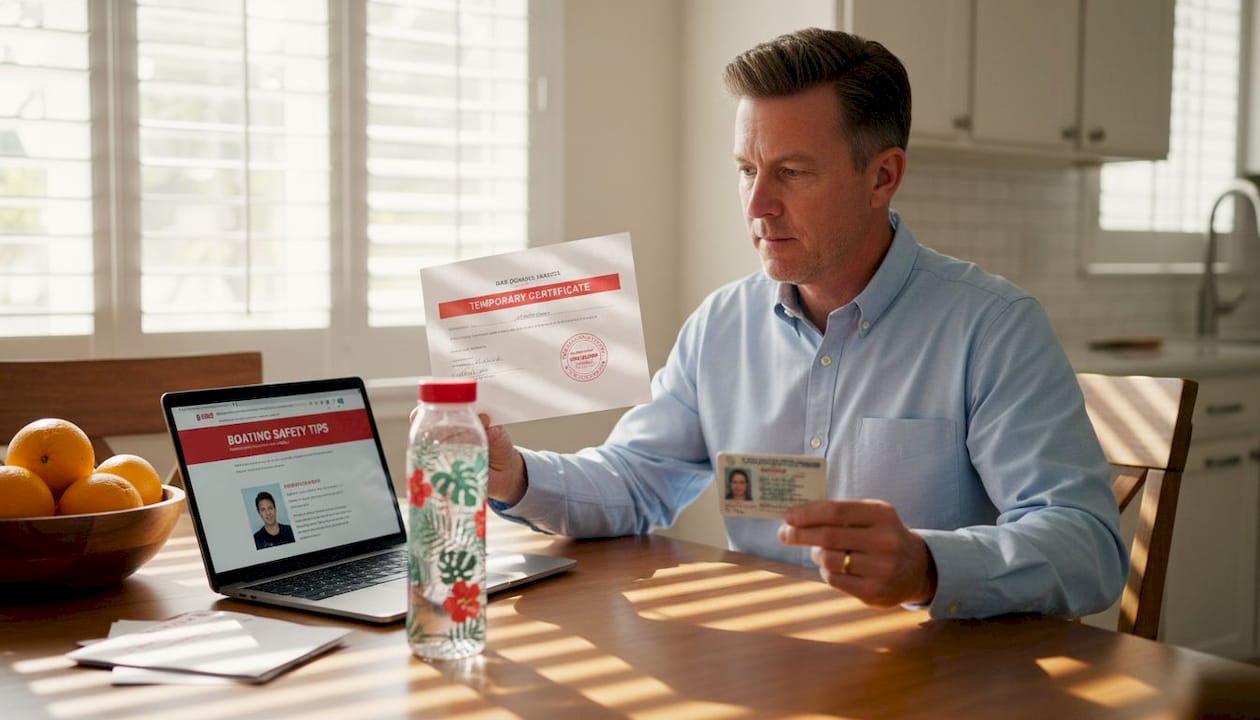
Florida’s waterways attract millions of boaters every year, and if you are new to the state or just visiting, getting on the water legally requires one document most people overlook until the last minute: the Florida boater education temporary certificate. Many boaters search online for shortcuts or “solved answers” only to find outdated, unreliable material that can leave them out of compliance with state law. This guide gives you factual, step-by-step information on exactly how to obtain, use, and manage your temporary certificate so you can focus on enjoying Florida’s waters without legal worry.
Table of Contents
- What is the Florida boater education temporary certificate?
- Key steps to getting your Florida temporary boater certificate
- Common myths and “answers” about the temporary certificate
- Certificate validity, renewal, and edge cases
- Head-to-head: Official vs. unofficial certificate sources
- The uncomfortable truth about “answers” and boating safety in Florida
- Get certified the right way: Start your Florida boater education today
- Frequently asked questions
Key Takeaways
| Point | Details |
|---|---|
| Temporary certificate lasts 90 days | Your Florida boater education temporary certificate is valid for up to 90 days from completion. |
| Use official providers only | Only certificates earned via approved Florida courses are legally recognized by authorities. |
| Myth-busting saves you trouble | Unapproved answer sheets and shortcuts do not satisfy legal or safety requirements. |
| Carry both certificate and ID | You must have your temporary certificate and a photo ID with you any time you operate a vessel. |
| Renew if your certificate expires | If your temporary certificate expires before your permanent card arrives, you must retake the course or exam. |
What is the Florida boater education temporary certificate?
The Florida boater education temporary certificate is a state-issued, short-term authorization that allows you to operate a vessel or personal watercraft (PWC) on Florida waters while your permanent Boating Safety Education ID Card is being processed. Think of it as a bridge document. It proves you completed an approved boating safety course or passed the required exam, but it is not your permanent credential.
Who needs this certificate?
- Florida residents born on or after January 1, 1988, who have not yet received their permanent Boating Safety Education ID Card
- Visitors renting or borrowing a vessel in Florida, regardless of what state or country they are from
- Anyone who has completed an approved course and is waiting for their permanent card to arrive by mail
The Florida boating course you take must be approved by the Florida Fish and Wildlife Conservation Commission (FWC). Only courses from FWC-approved providers produce a certificate that law enforcement will actually accept on the water.
Validity window: The temporary certificate is valid for up to 90 days from your course completion or exam pass date. After 90 days, the document no longer satisfies the state requirement, even if your permanent card has not yet arrived.
Statistic callout: Up to 90 days is the maximum period a Florida temporary certificate remains legally valid for vessel operation.
You are legally required to carry both your temporary certificate and a valid government-issued photo ID any time you operate a vessel. A digital copy stored on your phone is not automatically accepted as proof. Print it, laminate it if possible, and store it in a waterproof bag on board.
Pro Tip: The day you receive your temporary certificate, add a calendar reminder set for day 85. That gives you a five-day buffer to take action before the document expires.
Key steps to getting your Florida temporary boater certificate
With an understanding of what the temporary certificate is, let’s break down exactly how to get one in a few clear, actionable steps.
-
Choose an FWC-approved provider. Only courses and exams offered through providers listed on the FWC’s official approved provider list will generate a legally valid certificate. Verify approval status before you pay.
-
Complete the course or pass the required exam. Most approved providers offer an online option, a live classroom session, or a combination of both. The course covers navigation rules, Florida-specific boating laws, emergency procedures, required safety equipment, and PWC operation rules. Budget approximately three to five hours for completion.
-
Receive and print your temporary certificate. Once you finish the course and pass the final exam, you receive your temporary certificate, usually immediately via email or a downloadable PDF. Print it before going out on the water.
-
Carry both your certificate and photo ID on board. This is a hard legal requirement, not a suggestion. Florida law requires that you carry the temporary certificate together with a required photo ID whenever operating a vessel or PWC on Florida waters while awaiting your permanent card.
-
Track your certificate’s 90-day validity window. Write the completion date on the certificate itself or note it in your phone. Do not assume the 90-day period restarts or that a grace period exists. It does not.
“Carrying your temporary certificate and identification at all times is required by Florida law.”
Common traps to avoid:
- Relying on certificates from non-approved providers, which look official but are not legally recognized
- Forgetting to carry both the certificate and photo ID (one alone is not sufficient)
- Assuming your out-of-state or international boating license automatically covers Florida PWC operation requirements
- Printing the certificate once and then losing it without saving a backup digital copy
Taking an online Florida boating course from an approved provider is the most direct path. Courses are available on demand, meaning you can complete requirements the same day you need to get on the water. For visitors who plan a boat rental trip with short notice, this is especially useful.
Common myths and “answers” about the temporary certificate

While the path to certification is straightforward, plenty of misleading information exists online, especially about “solved answers.” Let’s clear up what works and what does not.
A quick internet search for Florida boating test answers returns dozens of third-party study sites and document-sharing platforms promising “100% solved answers.” These sites are not approved by the FWC and carry real risk. The websites marketing “solved answers” are not authoritative for legal compliance and may not match the current official exam or what Florida requires you to carry on board.
“Using online answer sheets can mislead you about actual exam content and does not produce any certificate recognized under Florida law.”
Top 3 myths about the Florida temporary certificate:
-
Myth 1: Printing an answer key from a third-party website earns you a certificate. False. No printed answer sheet, study guide download, or PDF from an unofficial site produces a certificate. Only completing an FWC-approved course and passing its exam generates a valid certificate.
-
Myth 2: Any boating license from another state automatically satisfies Florida’s temporary certificate requirement. False. Florida has specific age-based and course-based requirements. Some out-of-state credentials may be recognized for full residents, but short-term visitors operating PWCs often still need Florida-specific documentation from a rental operator or approved course.
-
Myth 3: A screenshot of your course completion email is sufficient proof on the water. False. While digital records have their place, Florida FWC officers may require a printed certificate. Carry a physical copy to avoid any compliance issue during a routine stop.
Risks of using unofficial answer sources:
- Fines and citations from FWC officers if your certificate cannot be verified
- Rental operators refusing to allow you on the water if your documentation is incomplete
- Operating under invalid credentials, which creates potential liability in the event of an accident
- Wasted time and money if you must retake a legitimate course afterward
Pro Tip: Focus on passing an approved course, not on shortcutting the process. The exam typically takes under an hour once you have completed the course material. Your legal record and personal safety are both at stake.
Certificate validity, renewal, and edge cases
Now that you know what not to do, let’s zoom in on how certificate timing and special rules affect legal compliance for both Florida residents and visitors.
| Certificate type | Who it applies to | Validity period |
|---|---|---|
| Temporary course-completion certificate | Residents and visitors awaiting permanent ID | Up to 90 days |
| Permanent Boating Safety Education ID Card | Florida residents who completed approved coursework | Lifetime (no expiration) |
| Rental operator temporary certificate | Short-term renters completing a brief orientation | Varies by operator; not equivalent to approved coursework |
Special situations to plan for:
- Repeat visitors: If you visit Florida multiple times per year and your 90-day temporary certificate expires between trips, you must retake the approved course or exam. There is no renewal mechanism for the temporary certificate itself.
- Rental scenarios: Some rental operators issue their own orientation documentation. This is typically not a substitute for an FWC-approved certificate if you are under the age requirement and plan to operate a PWC.
- Multiple trips within 90 days: If all your Florida boating trips fall within a single 90-day window after course completion, one temporary certificate covers all of them.
Statistic callout: 90 days. That is the absolute maximum validity for Florida’s temporary boater education certificate. No exceptions.
If you attempt to operate after the temporary certificate expires, your temporary document no longer satisfies the state requirement. Officers on the water have no discretion on this point. Plan proactively.
Red flags in your documents and timeline to watch for:
- Completion date missing or illegible on the certificate
- Provider name not found on FWC’s official approved provider list
- Certificate showing a course name that does not match the FWC-recognized curriculum
- Expiration date approaching with no action taken to obtain the permanent card
Head-to-head: Official vs. unofficial certificate sources
With the rules and timing clarified, it is helpful to see, side by side, why using an approved provider beats any unofficial “answer” site.
Only FWC-approved courses or exam providers can issue legally valid certificates. No unofficial source produces documentation that law enforcement recognizes.
| Criteria | FWC-approved official provider | Unofficial “answer” site |
|---|---|---|
| Legal status | Fully recognized under Florida law | Not recognized; no legal standing |
| Certificate issued | Yes, immediate upon course completion | No certificate produced |
| Accepted by law enforcement | Yes | No |
| Accepted by rental operators | Yes | No |
| Renewal and record-keeping | Permanent record on file | No record exists |
| Accuracy of content | Current, FWC-aligned curriculum | Often outdated, unverified |
| Risk level | None when properly completed | High: fines, citation, liability |
Why official routes protect you long-term:
- Your completion record is stored with the approved provider and can be verified by FWC if your physical certificate is lost
- You learn actual navigation rules and emergency procedures that reduce your risk of accidents
- Rental companies, marinas, and FWC officers all recognize the credential without question
- One course investment covers a lifetime of recognized education through the permanent ID card
Exploring online boating courses from approved providers takes the same amount of time as scrolling through unofficial answer sites, with a result that is actually legally valid.
The uncomfortable truth about “answers” and boating safety in Florida
Here is an observation that comes from working with boaters across every experience level: the people who search hardest for answer shortcuts are often the least confident about their actual knowledge on the water. That gap between test score and real-world competence is not just a legal problem. It is a safety problem.
Florida waters see thousands of reportable boating accidents every year. A significant portion involve operator error: misreading navigational markers, failing to yield in crossing situations, not knowing what to do when a passenger goes overboard. These are exactly the scenarios covered in an FWC-approved Florida-approved online course. Skipping that knowledge by gaming the test does not erase the hazards. It just means you face them unprepared.
There is also the practical reality that unofficial answer sheets become outdated fast. The FWC periodically updates exam content to reflect new regulations, equipment standards, and environmental rules. An answer key from two years ago may lead you to choose wrong answers on today’s exam, which means you fail anyway.
The smarter move is straightforward: complete the approved course, absorb the material, pass the exam legitimately, and get on the water with both a valid certificate and genuine situational knowledge. That combination is what makes Florida boating enjoyable and sustainable over the long term. Shortcuts cost more time, money, and risk than they save.
Get certified the right way: Start your Florida boater education today
With the risks and long-term value of official certification clear, here is how you can start on the right foot.
Safe Boating America offers a state-approved Florida boating certificate course that you can complete online, on your schedule, and receive your temporary certificate the same day. The course is FWC-approved, covers all required curriculum, and is taught using NASBLA-approved materials by USCG-licensed instructors.
Traveling from outside Florida or planning to boat in multiple states? Safe Boating America also provides nationwide boating courses covering state-specific requirements across the country. One platform, one trusted source, full compliance wherever you boat. Start today and get on the water with confidence, not questions.
Frequently asked questions
How long is the Florida temporary boater education certificate valid?
The Florida temporary certificate is valid for up to 90 days from the date of course completion or exam pass. After that date, the document no longer satisfies the state’s boater education requirement.
Is it legal to use answer sheets from the internet to pass the Florida temporary certificate test?
No. Answer sheet sites are not recognized by Florida authorities and do not produce any valid certificate. Only results from an FWC-approved course exam carry legal standing.
What do I need to carry on the boat after earning my Florida temporary boater certificate?
You must carry your printed temporary certificate along with a valid photo ID at all times when operating a vessel. Florida law requires both documents to be present on board together.
Can I renew my Florida temporary certificate if it expires before I get my permanent card?
There is no renewal process for the temporary certificate. If yours expires before your permanent Boating Safety Education ID Card arrives, you must retake the approved course or exam to receive a new temporary certificate.
Recommended
- Florida Boating & PWC Certification Course Online
- How Boating Education Lowers Accident Rates and Saves Lives - Safe Boating America
- Connecticut Boating License: How to Get Your CT Boating Certificate - Safe Boating America
- New York Boating License: How to Get Your NYS Boating Certificate - Safe Boating America