
What is boating safety education: your guide to certification
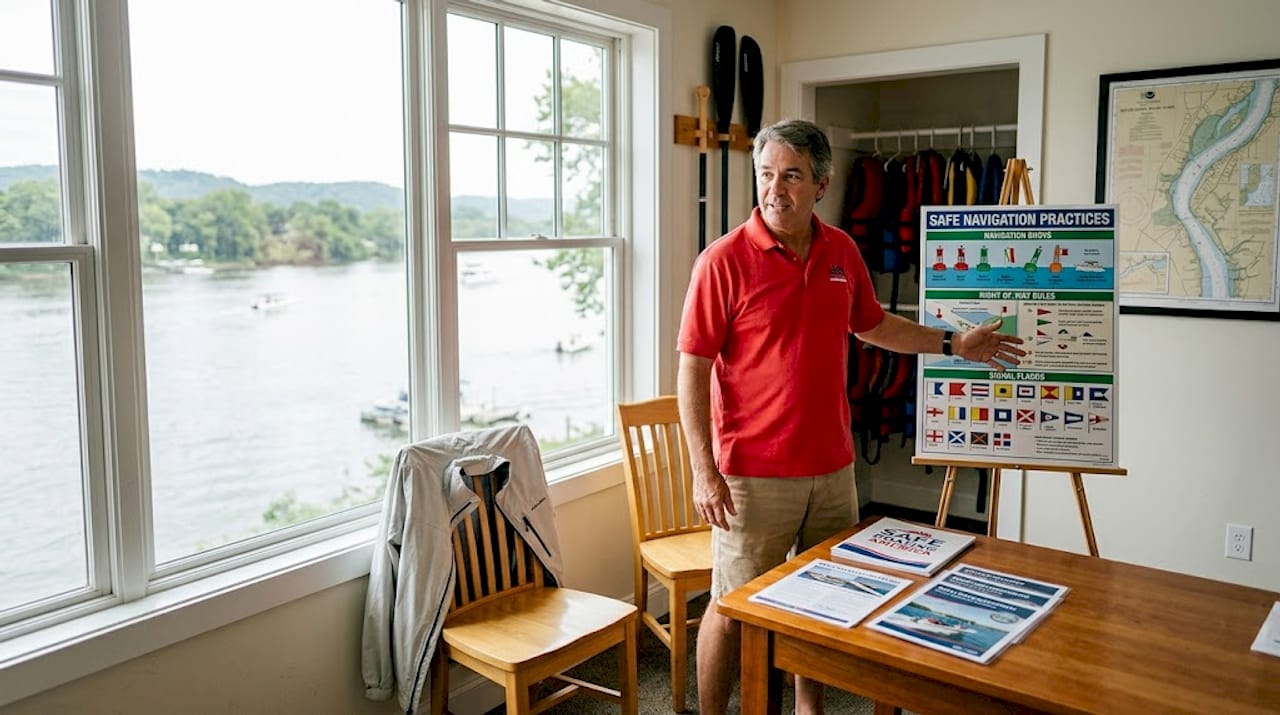
Most recreational boaters assume that knowing how to steer a boat is enough. It isn’t. What is boating safety education? It’s a structured, state-recognized program that covers navigation rules, emergency procedures, required equipment, and the legal responsibilities every vessel operator carries on the water. Many boaters don’t realize that operating without proper boating safety certification isn’t just risky — in many states, it’s illegal. Completing an approved course gives you documented proof of compliance and the practical skills to handle real situations, from sudden weather changes to man-overboard emergencies.
Table of Contents
- What is boating safety education and who needs it?
- Legal requirements and obtaining your boating safety certificate
- Choosing the right boating safety course: formats and state variations
- How boating safety education enhances your skills and on-water confidence
- The overlooked realities of boating safety education
- Get your state-approved boating safety certification with Safe Boating America
- Frequently asked questions
Key Takeaways
| Point | Details |
|---|---|
| Boating safety education definition | It comprises approved courses covering safety, laws, and navigation to legally operate many motorized vessels. |
| Legal certificate requirements | Many states mandate carrying a boating safety certificate as proof of completed education while on the water. |
| Course format options | You can choose from online, in-person, or virtual classes depending on your schedule and learning style. |
| Interstate compliance tips | Confirm each state’s acceptance rules before boating across state lines to ensure your certificate is valid. |
| Practical safety benefits | Boating education reduces accidents by teaching vital skills and safe operating practices. |
What is boating safety education and who needs it?
Boating safety education is a formal instructional program that teaches vessel operators how to operate watercraft legally and safely. Courses follow standards set by NASBLA, the National Association of State Boating Law Administrators, ensuring that core topics are consistent regardless of which state you take the course in.
Core curriculum typically includes:
- Navigation rules and right-of-way on the water
- Required safety equipment (life jackets, fire extinguishers, flares, sound signals)
- Emergency response procedures, including man-overboard and capsizing
- Vessel operation basics: docking, anchoring, and trailering
- Alcohol and boating laws
- Environmental protection and water courtesy
- State-specific boating regulations
Who needs it? That depends on your state. Requirements often hinge on your age, the horsepower of the vessel you operate, or whether you’re riding a personal watercraft (PWC) like a Jet Ski or WaveRunner. Pennsylvania is a clear example of how these thresholds work in practice. Pennsylvania boating course requirements apply to PWC operators of any age, as well as motorboat operators born on or after January 1, 1982, operating vessels over 25 horsepower.
State-approved boating education courses are typically designed to take about 6 to 8 hours of instruction and end with a certification exam. Pass the exam and you earn a boating safety education certificate that is valid for life in most states. This isn’t a periodic renewal like a driver’s license. One course, one certificate, lifelong proof of compliance.
Pro Tip: If you operate a PWC, check your state’s rules separately from motorboat rules. Many states impose stricter requirements on personal watercraft operators, even for adults who already hold a regular boating certificate.
Legal requirements and obtaining your boating safety certificate
Completing a course is only part of the equation. The legal requirement in most states isn’t just that you took a course. It’s that you can prove you took it, on the water, during an enforcement stop.
Key legal possession rules:
- You must carry your certificate while operating the vessel
- Law enforcement officers can request it during any stop or inspection
- Acceptable formats include paper certificates, plastic wallet cards, and digital images on a smartphone
- Temporary certificates issued immediately after course completion are legally valid
- Permanent certificates are typically mailed within a few weeks of course completion
Pennsylvania’s requirements cover PWC operators and motorboat operators born on or after January 1, 1982. Missing that certificate while out on the water can result in fines, even if you legitimately completed the course weeks ago. The rule is possession, not just completion.
Pennsylvania issues a temporary certificate valid for 60 days immediately after you finish an approved course. The permanent card arrives by mail. Pennsylvania’s boating law is explicit: any operator who is required to have a certificate must carry it while boating. Storing it at home defeats the purpose legally.
Age and vessel power thresholds are the most common triggers across all states. If you were born after a specific date or you’re operating a vessel above a horsepower limit, the requirement applies to you. Understanding exactly where your situation falls under your state’s rules prevents fines and avoids interruptions to your time on the water.
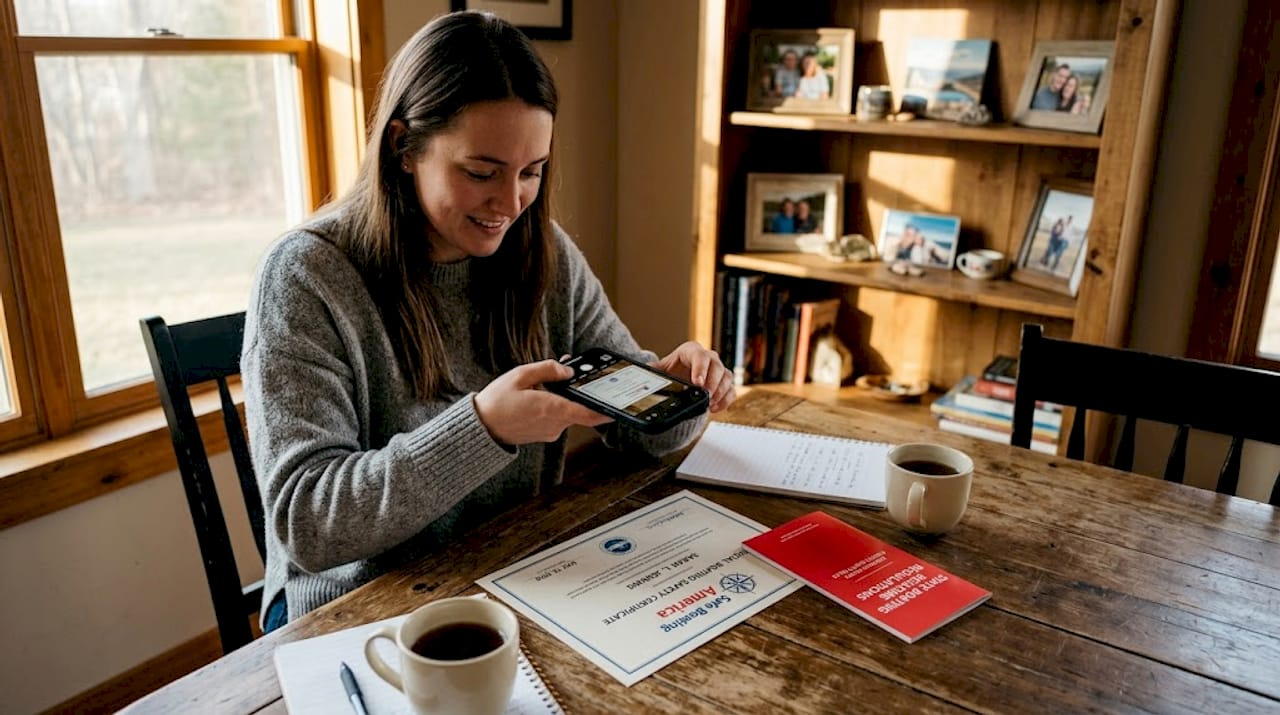
Pro Tip: Take a photo of your certificate and save it to your phone’s camera roll before you go out. Most states accept digital images as valid proof during enforcement stops. This backup protects you if the physical card is left behind.
Choosing the right boating safety course: formats and state variations
Not all approved courses are the same format, and the right choice depends on your schedule, learning style, and specific state requirements.
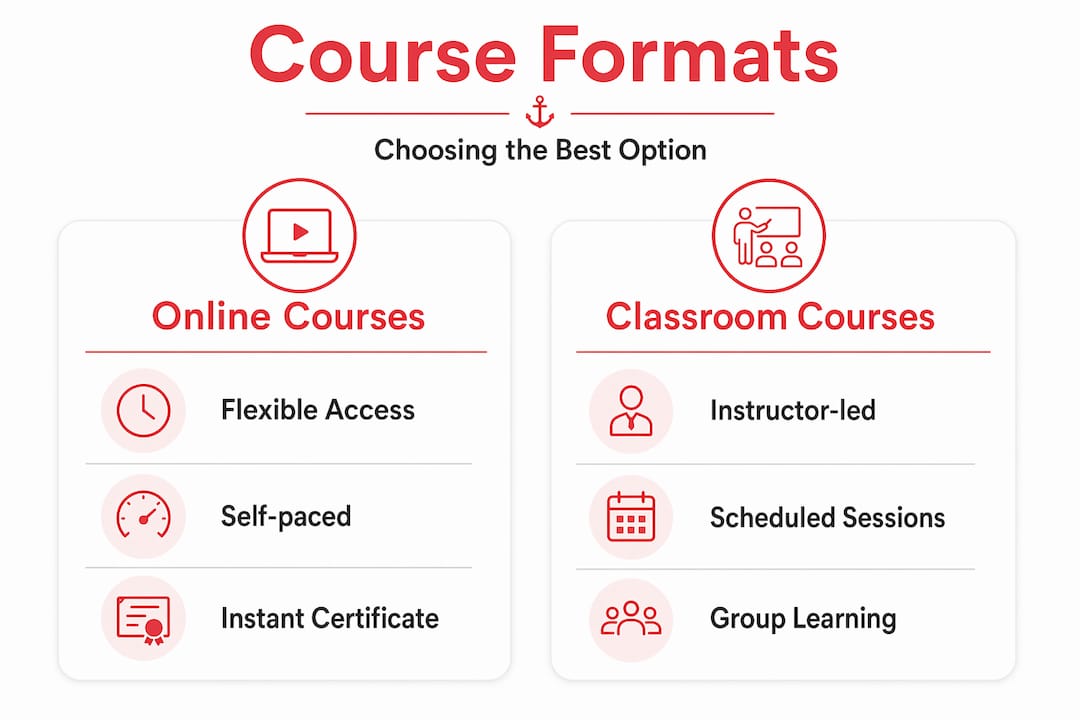
Course format comparison
| Format | Flexibility | Instructor interaction | Typical cost | Best for |
|---|---|---|---|---|
| Online, self-paced | High | None | $25 to $50 | Busy schedules, independent learners |
| In-person classroom | Low | High | $35 to $75 | First-time boaters, hands-on learners |
| Live virtual (Zoom) | Moderate | High | $35 to $65 | Those who want real-time Q&A with flexibility |
How to choose the right course in four steps
- Confirm your state’s accepted course formats. Not every state accepts every format. Some require in-person testing even if you study online.
- Verify the provider is NASBLA-approved or state-approved. This is the minimum standard for legal recognition in most states.
- Check vessel-specific requirements. If you’re operating a PWC, make sure the course explicitly covers PWC safety. General motorboat courses may not satisfy PWC-specific mandates.
- Confirm out-of-state recognition if you boat in multiple states. NASBLA-approved certificates have wider recognition, but not universal acceptance. Call or check the boating authority of any state you plan to visit.
Pennsylvania’s boating authority offers both online and in-person approved courses, with a $10 certificate fee separate from any course fees charged by the provider. Nationally, Arizona boating courses follow one set of state standards, while Florida boating courses follow another. Always check both.
Pro Tip: Don’t pick a course solely based on price. A course that isn’t accepted in your state wastes both money and time. Spend two minutes confirming state approval before you enroll.
How boating safety education enhances your skills and on-water confidence
Legal compliance is the floor, not the ceiling. The practical value of boating safety training extends well beyond avoiding fines.
Skills you develop through boating safety education:
- Weather awareness. Recognizing developing storm patterns, reading wind shifts, and knowing when to return to shore before conditions deteriorate.
- Navigation rules. Understanding right-of-way on the water prevents collisions, particularly in busy channels, harbors, and near commercial traffic.
- Emergency procedures. Responding correctly to a capsizing, a fire on board, or a passenger overboard requires prior knowledge, not improvisation.
- Alcohol awareness. Boating under the influence (BUI) is a federal offense. Courses clarify the legal limits and the physiological risks that make alcohol more dangerous on the water than on the road.
- Safe vessel handling. Docking, anchoring, and operating in restricted-visibility conditions are skills that only deliberate instruction can build reliably.
“Operator inexperience and lack of safety education are consistently among the top factors in boating accidents; states with mandatory education have seen reductions in fatalities and injuries.”
The data supports what experienced boaters already know. Education changes behavior. Boaters who understand the rules of the waterway operate differently than those who don’t. They check weather. They count life jackets before departure. They know what a sound signal means. That gap in behavior is what separates most accident scenarios from safe outings.
For a direct look at how these outcomes connect, the research on boating education impact shows measurable reductions in accidents where mandatory education laws are in place.
The overlooked realities of boating safety education
Here’s what most guides won’t tell you: completing a course and being legally compliant are not the same thing.
Most first-time students focus entirely on passing the exam. That’s reasonable. But the moment you finish that exam, the legal clock starts running differently. You now have a temporary certificate. It’s valid. But if you go boating the next day without carrying that temporary certificate on the vessel, you are in violation of the law in states like Pennsylvania, even though you completed the course hours earlier.
The certificate is the legal instrument. Completion is just the prerequisite.
There’s another nuance that trips up traveling boaters. You take a Pennsylvania boating certification course, then head to Florida for a week and plan to rent a boat. Your Pennsylvania certificate may or may not satisfy Florida’s requirements. NASBLA-approved certificates are not uniformly accepted across all states or all operator categories. Assume nothing. Verify in advance.
Age and vessel-type requirements create another layer of complexity. A boater who completed a general motorboat course years ago may not satisfy newer PWC-specific requirements their state added after the fact. Pennsylvania’s rules specify that temporary certificates carry full legal weight during the waiting period for a permanent card, but operators must treat them as the real document they are.
The practical takeaway: align your course completion with your actual boating plans. Finishing a course in the middle of winter and then scrambling to find your certificate the following spring is a common and avoidable problem. Complete your course close to your planned boating season, carry your certificate every time, and verify out-of-state acceptance before you cross state lines on the water.
Get your state-approved boating safety certification with Safe Boating America
Knowing the requirements is useful. Having the certificate in hand is what matters on the water.
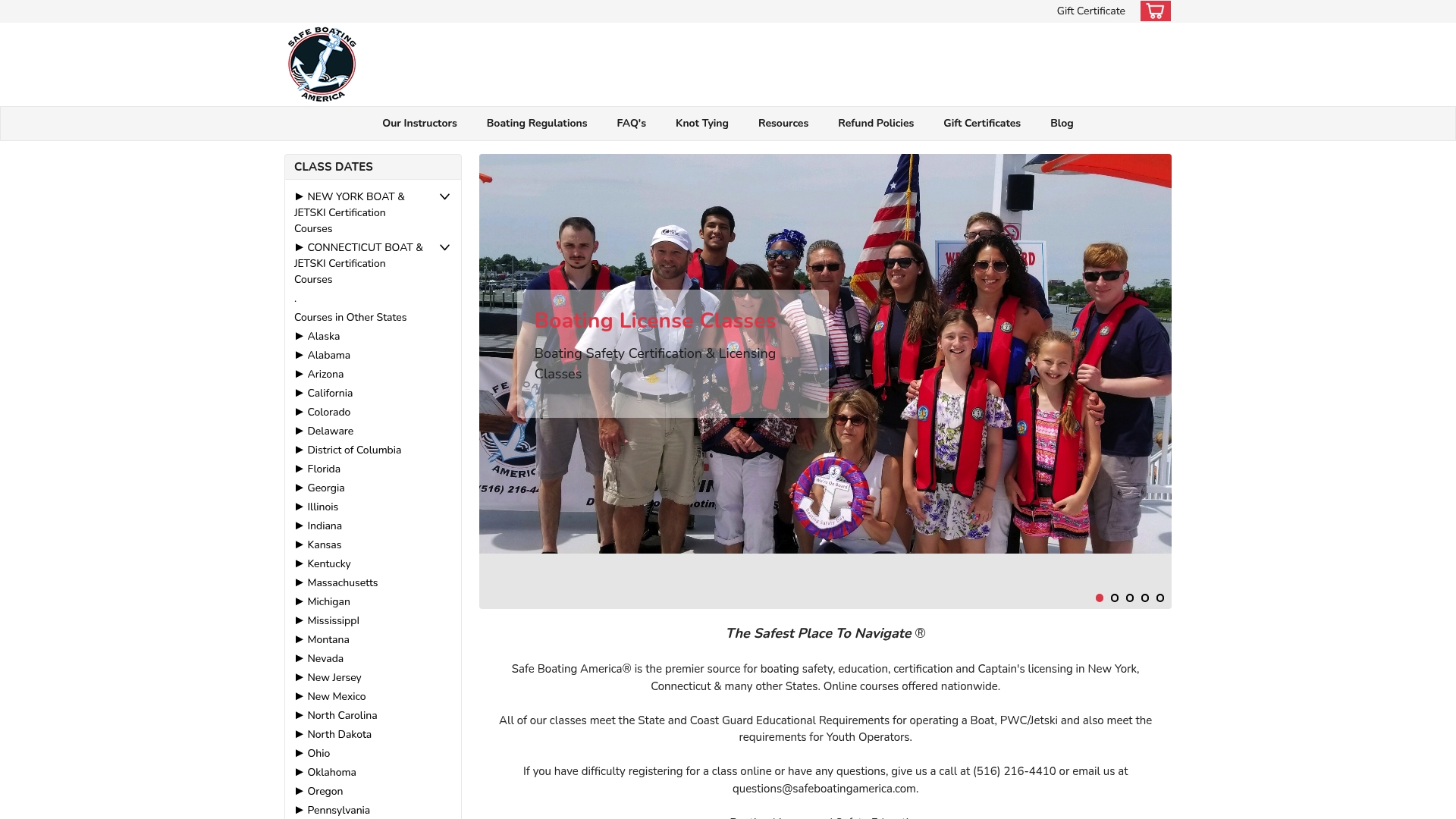
Safe Boating America offers NASBLA-approved boating safety courses designed to satisfy state requirements nationwide, with options for online, live Zoom, and in-person instruction. Courses are taught by State Certified Instructors and USCG-Licensed Captains covering navigation rules, PWC safety, emergency procedures, and state-specific boating laws. Whether you need a Florida boating certification course or certification in any other state, flexible scheduling and same-day certification options mean you can complete your training and get on the water quickly. Browse online boating safety courses and find the format that fits your schedule and state requirements.
Frequently asked questions
Is boating safety education mandatory in all states?
No. Requirements vary by state and typically depend on the operator’s age, vessel horsepower, or vessel type. That said, most U.S. states have enacted some form of mandatory boater education for at least a portion of their boating population as of 2026.
How long is a boating safety education certificate valid?
In most states, including Pennsylvania, boating safety education certificates are valid for life after successful course completion. There is no periodic renewal requirement in the majority of states.
Can I use an online course certificate from one state in another state?
Not always. While NASBLA-approved courses have broader recognition, states can add additional requirements or restrict which course formats they accept. Always verify acceptance with the destination state’s boating authority before assuming your certificate is valid there.
What should I do immediately after completing an online boating safety course?
Print or save your temporary certificate right away and carry it on the vessel every time you go out. Online completers receive a temporary certificate that is valid for up to 60 days while your permanent card is processed and mailed.